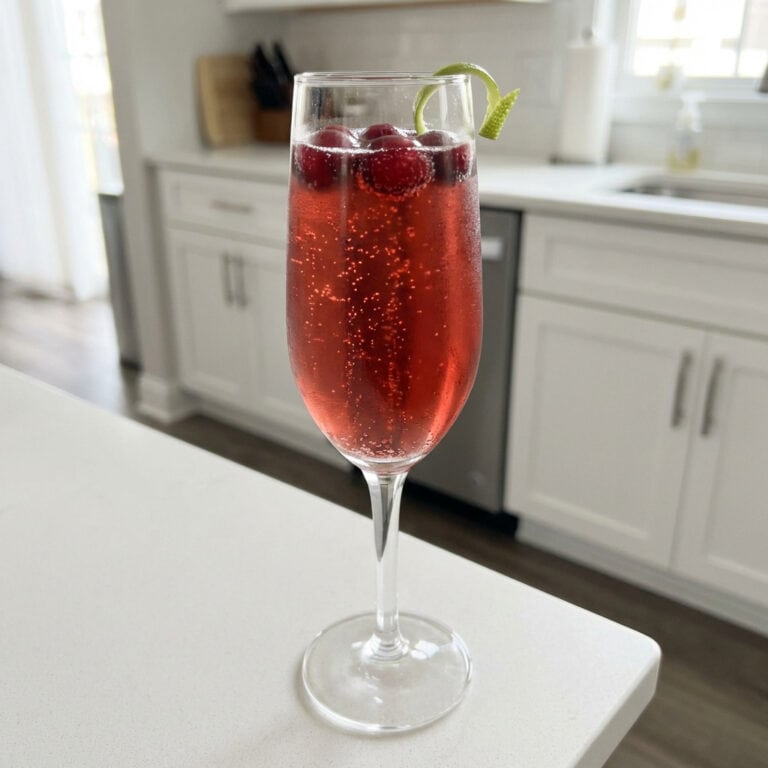

A mimosa is a brunch classic—orange juice and champagne, bright and bubbly, and just a little bit fancy. The traditional version? Equal parts chilled champagne and fresh orange juice, poured into a champagne flute.
It’s called a mimosa because the drink’s sunny color looks a lot like the yellow mimosa flower. While the basics are simple, there’s plenty of room to play around. Some folks add a splash of Grand Marnier, or swap in other juices if they’re feeling adventurous.
You don’t need to be a bartender to make a good mimosa, but a couple of tricks can really help. Freshly squeezed orange juice and cold ingredients make a big difference in both taste and looks.
This cocktail’s easy enough for a quiet breakfast, but it works just as well for a crowd.

Mimosa Cocktail Recipe

Equipment
- Measuring jigger (optional)
- Pitcher (for making multiple servings)
- Knife and cutting board for garnishes
Ingredients
For one serving:
- 2-3 oz 60-90 ml chilled orange juice
- 3-4 oz 90-120 ml chilled champagne or sparkling wine
- Orange slice or twist for garnish
- Optional: 1/2 oz 15 ml Grand Marnier or triple sec
Types of sparkling wine to use:
- Champagne traditional, from France
- Prosecco Italian, slightly sweeter
- Cava Spanish, drier option
- Sparkling wine American or other regions
Instructions
- Chill all ingredients in the fridge for at least 2 hours.
- Pour the orange juice into your flute, filling about a third of the glass.
- Slowly add the champagne, tilting the glass and pouring gently down the side to keep those bubbles lively.
- Stir gently if you want, but a lot of people skip this for a pretty gradient look.
- Garnish with an orange slice or a little twist of peel.
Notes
Tasting Notes
The Mimosa’s all about balance—sweet, citrusy, and a little tangy, with bubbles that keep things light and festive. There’s a reason it’s a brunch favorite.
When you get it right, you’ll taste clean citrus up front. Orange juice brings natural sweetness and a bit of zing, which plays nicely with the dry notes from the champagne.
Flavor Profile:
- Primary: Fresh orange, crisp bubbles
- Secondary: Subtle wine notes, gentle acidity
- Finish: Clean, slightly sweet
The mouthfeel is light, bubbly, and just a little creamy from the juice. Those tiny champagne bubbles are honestly half the fun.
Temperature matters more than you’d think. A cold mimosa (shoot for 38-40°F) is way more refreshing and keeps its fizz longer.
Fresh juice really does make a difference. And a good sparkling wine adds a touch of complexity without taking over.
Most people like the classic 1:1 ratio, but you can easily tweak it. More champagne for a drier sip, more juice if you want it fruitier.
A good Mimosa shouldn’t taste boozy or syrupy. It’s all about that delicate balance between fruit and bubbles—simple, but kind of perfect.